
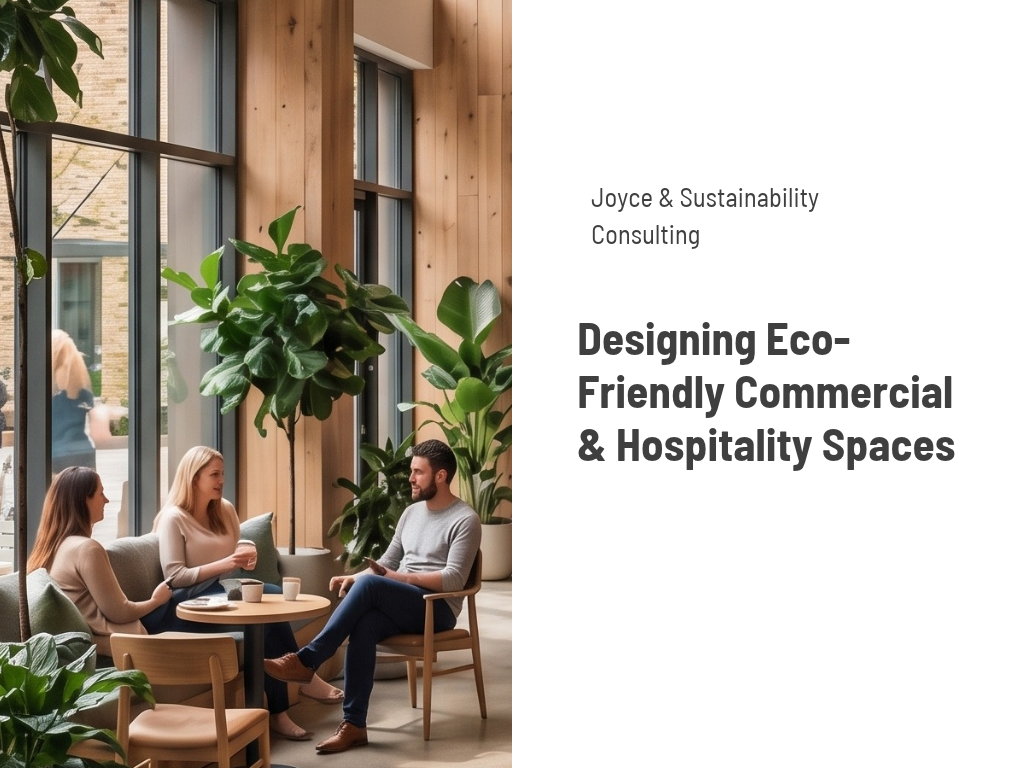
Did You Know Energy Is Expensive in Commercial Buildings and Properties?
Poorly insulated UK hotels and commercial spaces face substantial energy bills. A typical 40-room hotel employing 50 staff spends between £110,000 and £145,000 annually. While baseline electricity costs for kitchens and lighting remain steady year round, winter heating bills skyrocket due to high ceilings and draughty windows.
As a result, combined monthly bills jump from £8,000 in summer to £14,000 in winter. Strict heritage and listing regulations often prevent owners from retrofitting modern insulation, forcing boutique hotels to pay up to £3,600 per bedroom every year.
Sustainable design aims to minimise negative environmental and social impacts while cutting electricity bills by integrating natural elements like lighting and plants, keeping a comfortable temperature with reduced electricity use, and introducing health and wellbeing initiatives.

Why Sustainable Design is Essential for Wellbeing?
The goal of green interior design is to create healthy, functional spaces that enhance wellbeing while reducing resource consumption. Similarly, inclusive planning in community development fosters social equity and environmental care, creating strong, vibrant neighbourhoods that support better public health.
According to recent research, 66% of architects believe sustainable materials significantly improve occupant health and wellbeing. Studies show that spending just 20 minutes in an environment featuring biophilic design can measurably lower stress levels and boost mood.
Integrating sustainable principles into architecture does not cost much, yet it significantly improves spaces for building owners, guests, and the wider community. Simple interventions, such as incorporating indoor plants or using natural timber, can transform a space.
The Guide to Sustainable Design
✦ Strategy 1: Install Solar Panels and Improve Energy Efficiency
Integrating sustainable principles into architecture does not cost much, yet it significantly improves spaces for building owners, guests, and the wider community. Simple interventions, such as incorporating indoor plants or using natural timber, can transform a space.

✦ Strategy 2: Create a Social Area for Activities
Designing communal spaces that encourage physical activity and social engagement enhances occupants’ overall wellbeing and experience. By providing inclusive, welcoming venues for social activities, businesses can tangibly demonstrate their commitment to diversity and inclusion while creating a strong sense of belonging for all community members.
✦ Strategy 3: Promoting Neurodiversity and Inclusion
Universal design ensures commercial environments are safer, more accessible, and intuitive for everyone, regardless of physical ability. Prioritising these principles promotes true social inclusion and equality, ensuring that all occupants can navigate and participate in the space fully and independently.
✦ Strategy 4: Bringing Nature Indoors
Incorporating biophilic elements like natural light, indoor plants, living green walls, and raw materials elevates interior aesthetics while supporting climate resilience. Furthermore, adding features like rooftop gardens and landscaped outdoor areas provides occupants with vital spaces for relaxation while actively protecting local biodiversity.
✦ Strategy 5: Growing Food Locally
Cultivating organic produce on rooftop farms provides fresh, locally grown ingredients for on-site restaurants while drastically reducing scope 3 emissions associated with food transport. By growing food precisely where it is consumed, businesses minimise the need for long haul logistics, cutting both transport costs and greenhouse gases.

Sustainable design will no longer be optional for the UK commercial and hospitality sectors. As the industry navigates the climate emergency and rising operational costs from inflation, integrating high performance architecture with biophilic and inclusive principles provides a clear path to long-term business resilience.
That is why we provide bespoke sustainability consultancy: to help your business deliver eco-friendly experiences for guests and shareholders, demonstrate progress through verified environmental data, and ensure a positive, lasting impact on the wider community.
Need advice on sustainably designing your hotel, restaurant, venue, or commercial space?
Book a call today for a tailored project quote.
Read more…
How to Reduce Scope 3 Emissions in UK Supply Chains: A Complete Guide
Leave a Reply